Since I'm doing the structure of a eukaryotic plant cell in the animation in some way I need to show each structure contained within the cell, and I think that animating them going about their normal functions would be quite a good idea. Not quite sure what I'm going to do yet but I do know that I want to start outside the cell and end at the nucleus.
There are quite a few structures inside a cell and each have a different function so below is a list of all the structures and their functions.
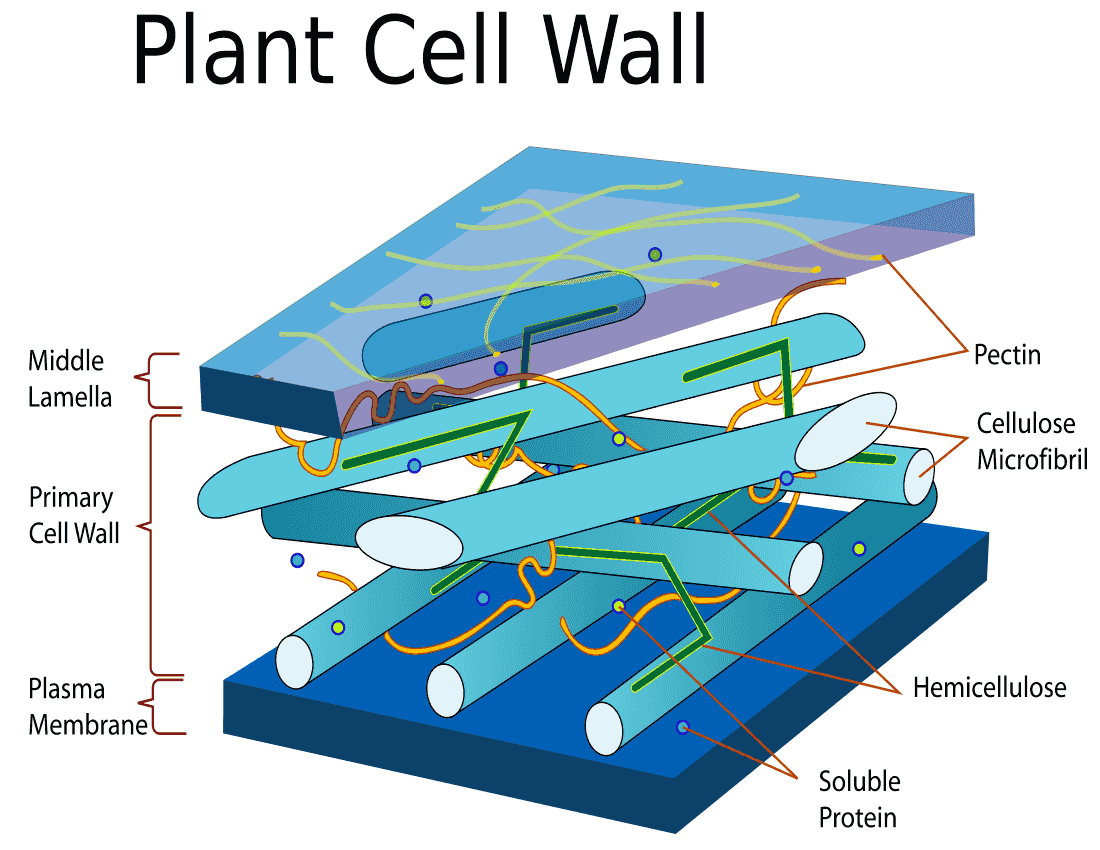
Cell Wall

Functions of the cell wall in plant cells include preventing the cell bursting when osmosis allows water to enter and provides the cell with structure and a definite shape.
Plasma Membrane

This is a very thin phospholipid bi-layer. It controls the movement of substances in and out of the cell; further explanation can be found later in this book.
Cytoplasm
The cytoplasm consists of all of the contents outside of the nucleus and enclosed within the cell membrane of a cell. This includes the cytosol and in euckaryotic cells, organelles such as mitochondria and ribosomes. Also located within the cytoplasm is the cytoskeleton, a network of fibres that help the cell maintain its shape and give it support.
The cytoplasm is clear in colour and has a gel-like appearance. It is composed mainly of water and also contains enzymes, salts, organelles, and various organic molecules. The cytoplasm helps to move materials around the cell and also dissolves cellular waste.
Central Vacuole
The vacuole is a fluid filled sac bound by a single membrane - it contains a solution of sugars, amino acids, waste products and mineral salts. It can serve as a temporary store, for waste or food, and can also contain hydrolytic enzymes. They also support some plants by providing an osmotic system which creates a pressure potential
 Chloroplast
These are relatively large organelles, found only in photosynthesising cells, are green in colour due to the presence of the pigment chlorophyll, and at high magnifications grana can be seen in them. Grana are used in photosynthesis which will be discussed more later.
Mitochondria
Structure

- dual membrane forming an envelope
- Inner membrane folded to form cristae, projecting to the inside of the mitochondria, known as the matrix
Function
- Perform later stages of aerobic respiration, a metabolic process that creates ATP
- Also involved in lipid synthesis
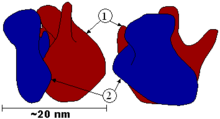
Ribosome
Structure

- One large and one smaller subunit
- Comprise of RNA (ribosomal) and protein
- 20nm size
Function
Lysosomes (Usually not present)
Structure

- Around 0.1-1.0µm in diameter
- Membrane surrounding digestive enzymes known as hydrolases
Functions
- Digesting worn out organelles, or bacterium taken in during phagocytosis
- Bind to the cell membrane and release their enzymes outside of it in a process known as exocytosis like exocism

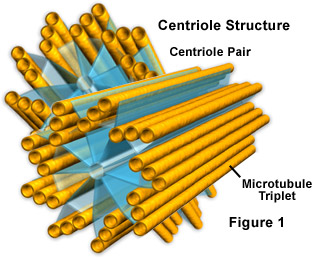
Centrioles (Only present in lower plant forms)
A centriole is a hollow cylinder formed from a ring of microtubules and used to grow the spindle fibres used in nuclear division.
Endoplasmic Reticulum
Structure

- Rough endoplasmic reticulum has its membrane surface lined with ribosomes.
- Smooth endoplasmic reticulum do not have ribosomes
Both form a series of sheets which enclose flattened sacs called a cisternae.
Function:
- Protein synthesis takes place in ribosomes on the rough endoplasmic reticulum
- Provide a large surface area for chemical reactions and a pathway for transport of materials through the cell
- Smooth endoplasmic reticulum is involved in lipid synthesis
Golgi Apparatus
Structure

- Similar to smooth ER, more compact
Function
- Collect, process and sort molecules.
- The stack of flattened sacs (cisternae) are constantly being formed by vesicles budding off at the end of smooth ER and being broken down at the other end to form Golgi vesicles.
Plasmodesmata

These fine strands of cytoplasm are linked through the cell wall, connecting neighbouring cells.
Microtubules

They are a component of the cytoskeleton, found throughout the cytoplasm. These tubular polymers of tubulin can grow as long as 25 micrometres and are highly dynamic. The outer diameter of microtubule is about 25 nm while the inner diameter is about 12 nm. They are found in eukaryotic cells and are formed by the polymerization of a dimer of two globular proteins, alpha and beta tubulin. Microtubules are important in a number of cellular processes. They are involved in maintaining cell structure and together with microfilaments and intermediate filaments, they form the cytoskeleton. They also make up the internal structure of cilia and flagella.They provide platforms for intracellular transport and are involved in a variety of cellular processes that involve the movement of secretory vesicles and organelles as well as the intracellular transport of substances (see entries for dynein and kinesin). They are also involved in cell division (mitosis and meiosis) including the formation ofmitotic spindles, which is the process by which eukaryotic cells separate their chromatids during cell division.
Cell Nucleus and Nuclear Envelope

The nucleus of a eukaryotic cell contains the DNA, the genetic material of the cell. The DNA contains the information necessary for constructing the cell and directing the multitude of synthesis tasks performed by the cell in the process of life and reproduction.
The nuclear envelope surrounds the nucleus with a double membrane with multiple pores. The pores regulate the passage of macromolecules like proteins and RNA, but permit free passage of water, ions, ATP and other small molecules. In this way the membrane exerts some control over the information flow in the cell since information is carried by the macromolecules.
Inside the nuclear envelope is the chromatin, meaning "colored substance" after the early experiments in which that material was highly colored by the staining techniques used. Chromatin consists of DNA associated with proteins which forms long strands called chromosomes. While the DNA remains in the nucleus, it controls most of the processes that occur in the cytoplasm of the cell. Information from the DNA can be transcribed to mRNA and transmitted to other cellular synthesis processes, and information from the cytoplasm can provide feedback to the nucleus.
The nucleolus is the central portion of the cell nucleus and is composed of ribosomal RNA, proteins and DNA. It also contains ribosomes in various stages of synthesis. The nucleolus accomplishes the manufacture of the ribosomes.